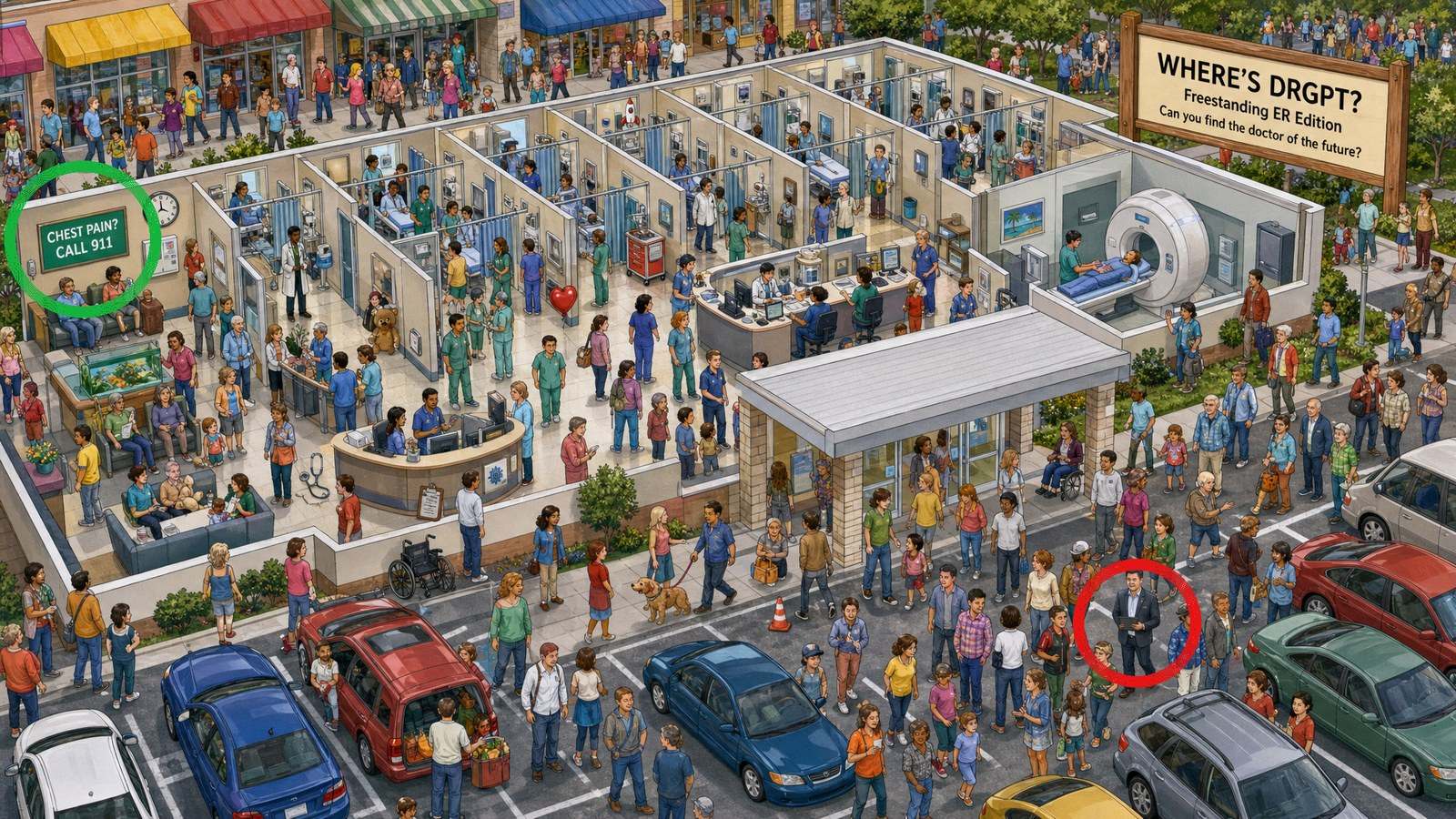
Patients ask me the same question in almost every shift: "Should I have come here, or gone to urgent care?" It is a fair question. The ER and urgent care can look alike from the parking lot, but they are built for different problems, and they bill very differently.
Here is the rule I give my own family. It takes about two minutes.
Minute one: could this kill or disable me today?
Ask yourself whether anything happening right now could be a heart attack, a stroke, a serious breathing problem, a severe bleed or a major injury. If the answer is yes, or even maybe, stop reading and call 911.
- Chest pain or pressure, especially with sweating or shortness of breath
- Face drooping, arm or leg weakness, trouble speaking, sudden vision loss
- Severe trouble breathing, choking or blue lips
- A seizure that will not stop, or someone who will not wake up
- Thoughts of suicide with a plan. Call 911, or call or text 988
Do not drive yourself with chest pain or stroke signs. Paramedics can start treatment on the way and take you to the right hospital.
Minute two: does this need an ER today?
If it is not a 911 emergency, ask whether you need tests or treatment that only an ER has, today. These usually belong in an ER, hospital or freestanding:
- Severe belly pain
- A head injury while you take a blood thinner
- Fever in a baby younger than 3 months
- Sudden severe testicle pain or swelling
- Vomiting blood, or black stool
- A broken bone that looks out of place
If you may need surgery, a specialist or an overnight stay, a hospital ER or a micro hospital avoids a transfer.
Everything else: urgent care or your doctor
Sprains, simple cuts, colds, sore throats, ear pain, mild rashes, urinary symptoms without fever or back pain, and prescription refills usually do well at urgent care or with your own doctor. Choosing the right place for these can save you hundreds of dollars or more.
A word about freestanding ERs in Texas
A licensed freestanding ER is a real emergency room, open 24 hours and staffed by emergency physicians. It bills like an ER, because it is one. Federal surprise billing rules protect you from most surprise out-of-network bills for emergency care, and Texas requires freestanding ERs to tell you whether they are in your plan's network. If you are stable, ask before you are treated.
When in doubt, get seen. I would rather see you for "nothing" than miss something serious.